
King County VINELink Coverage
Texas VINE through VINELink is a free custody and court-event information and notification service. The Texas Attorney General describes events that may include release, transfer, escape, and death, with court registration available separately in some cases. It is designed for a specific person and event, not as a historical list of all people released during a day or week.
King County facility participation was not independently confirmed. This is important because King County has zero local jail capacity in the state countywide report. The official Garza jail page links VINELink, which supports using Garza as the facility when the King County Sheriff confirms that Garza actually holds the person. The documented 2025 King agenda only proposed a Garza housing agreement, so never assume that every King arrest goes there.
Search a King County Inmate
Begin with the King County Sheriff at 806-596-4413 and ask where the person was booked. This step prevents a search under the wrong county or facility. Use a full name, date of birth, arrest date, and booking number when available. Similar names can belong to different people, so compare every identifier the result offers.
- Open the Texas VINE portal or call (877) 894-8463.
- Select Texas and search the individual by full name.
- Add the offender or booking number, date of birth, and confirmed facility when the interface offers those fields.
- Open the matching custody record and compare identifiers before relying on it.
- Read the exact status or event and note which facility supplied it.
- If the person is absent, call the confirmed jail and ask for current custody, release, or transfer status.
The successful manifest image from the Texas VINE portal shows the state entry point used for a specific-person search:
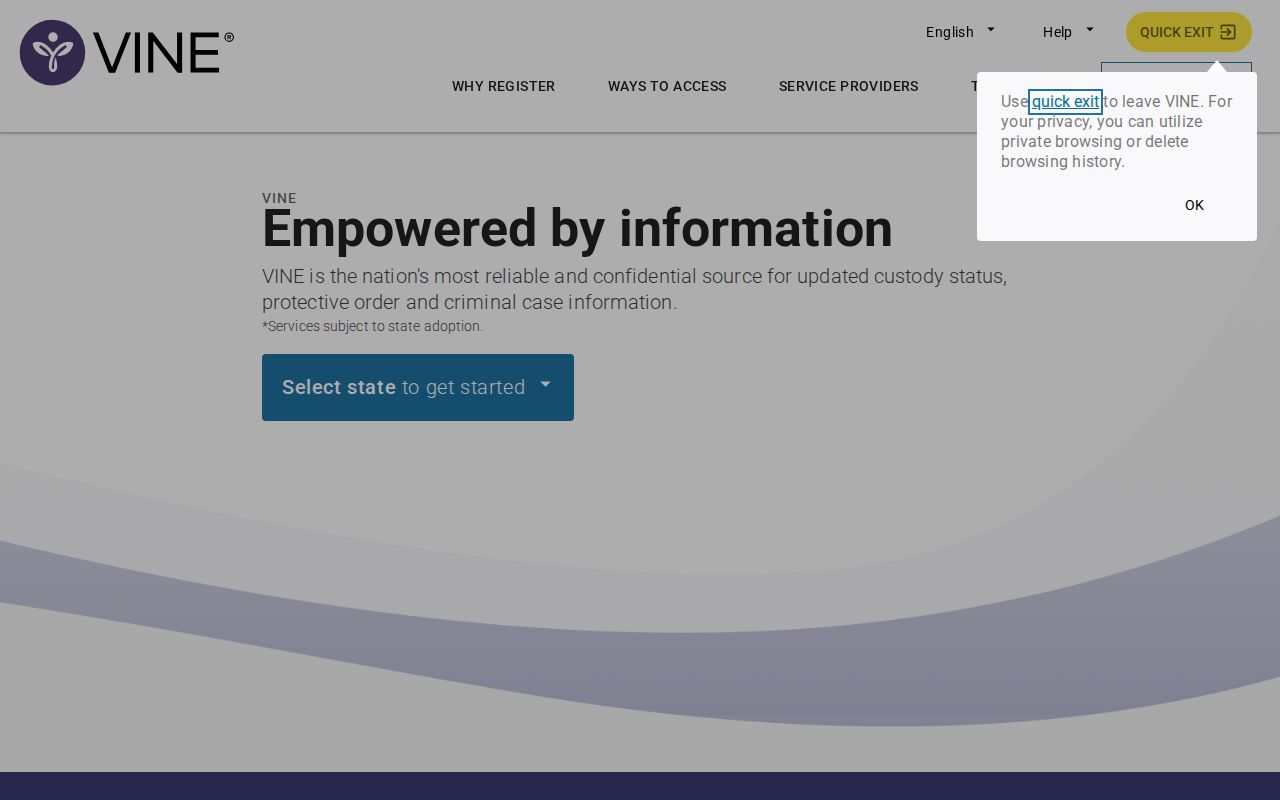
The interface may change. Follow its current prompts, but keep the facility and identity checks central to every search.
King County VINELink Result Fields
Texas VINE can present custody and event information reported by a participating agency. The exact screen varies by facility and record, so no field should be promised in every result. Treat a shown event as evidence about that facility only. Keep the booking or offender identifier with any note you make from the result.
| Field or event | How to read it |
|---|---|
| Name and identifier | Helps confirm the correct person and booking. |
| Reporting facility | Names the custodian to contact for verification. |
| Current custody status | Reflects the agency event supplied to VINE. |
| Release event | Signals departure from that custodian, subject to direct confirmation. |
| Transfer event | Means custody may continue with another agency. |
| Escape or death event | Distinct events that must not be labeled community release. |
| Court event | May be available through separate registration and coverage. |
The service does not promise a public retention window for released results. Do not use VINELink as a 24-hour or 72-hour archive. When durable proof matters, request the jail’s existing release transaction and pair it with the court order or judgment that supplied legal authority.
Register King County Release Alerts
Register only after locating a matching person who is shown in custody. The Attorney General brochure permits phone and email registration. Registration data is confidential. A phone alert requires an acknowledgment step, so choose a PIN that can be recalled but is not easy for another person to guess.
- Open the matching custody record and choose its registration or notification option.
- Add one or more phone numbers and/or email addresses as the live interface permits.
- Create a memorable four-digit PIN for telephone alerts.
- When an automated call arrives, listen to the message and enter the PIN followed by the pound sign.
- Call the jail after a release or transfer notice and request the date, time, event type, authority, and destination.
- If the PIN is forgotten or registration fails, call the hotline and press 0 for a 24-hour operator.
Without acknowledgment, automated calls may continue for up to 48 hours. The repeated call pattern does not create additional proof. It signals that the message has not been confirmed with the selected PIN. Email delivery also should be followed by a direct custodian check.
Note: VINE advises against relying on its notices as the sole protective measure because agency participation and operational delays can affect delivery.
Verify King County VINE Events
A release alert means the reporting facility entered a release-related event. It does not by itself show that the person is free from all custody. A jail may release someone to TDCJ, another county, ICE, USMS, a hospital, or another secure setting. Ask for the destination and receiving authority before describing the event.
| VINELink outcome | Required next step |
|---|---|
| Still in custody | Confirm the reporting facility and keep the alert active if desired. |
| Release event | Call for exact type, time, authority, and destination. |
| Transfer event | Identify and contact the receiving custodian. |
| No matching record | Recheck identity and facility, then call the jail. |
| Old or unclear result | Request the existing jail and court records. |
For Garza, call the jail at 806-990-9974 after King confirms placement there. Ask whether the person remains confined, was released to the community, or was transferred. A phone response can guide an urgent inquiry, while a written booking and release entry supplies more durable proof.
Garza VINELink for King Detainees
The Garza County Sheriff and jail page directly links VINELink. For a King detainee physically held at the Garza County Law Enforcement Center / Garza County Jail, that makes Garza the locally documented facility to search and register against, subject to a matching live record. It does not establish that Garza holds every King prisoner.
This local layer solves a common search error. Selecting King by county name may fail because the person is booked at an outside jail. First resolve physical custody with King, then search the facility that reports the event. If Garza confirms a record but VINELink shows nothing, rely on the custodian rather than turning the portal’s silence into a release claim.
The successful manifest capture of the Garza jail contact and VINE page shows that local connection:
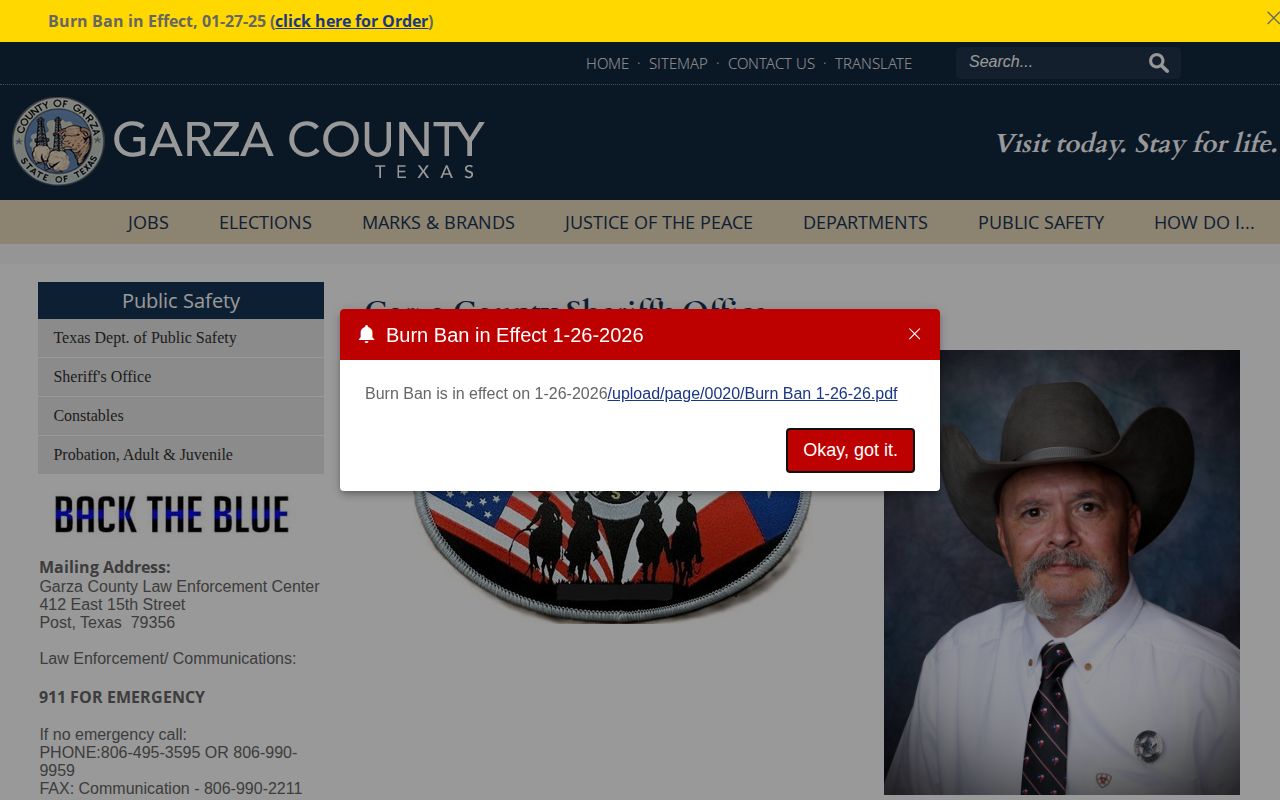
Use its jail contact for event confirmation after a matching VINELink notice or when the portal has no result.
King County VINE Versus IVSS
Texas uses two distinct notification paths. County-jail and participating court events use Texas VINE/VINELink. State-prison, parole, and mandatory-supervision information use the TDCJ Integrated Victim Services System, or IVSS. IVSS replaced TDCJ’s former VINE service. Do not promise that a TDCJ prisoner appears in the county VINELink workflow.
IVSS allows eligible users and concerned citizens to create an account, search offender status, and register for applicable notifications. Events may include parole review, Board decision, release processing, release, discharge, and parole-warrant activity. Its support telephone is 800-848-4284, and the IVSS FAQ explains current eligibility and interface details.
- County-jail release
- A departure from the actual county jail, checked with that jail and Texas VINE where participating.
- TDCJ release
- A departure from state-prison custody, checked through TDCJ status channels and IVSS.
- Discharge
- The end of the sentence or supervision obligation shown by the responsible state record.
- Transfer
- A move between custodians, not a community release.
Note: TDCJ reported a county-integration initiative, but no source independently proves King County participation in it.
King County Custody Beyond VINE
VINELink does not replace the official tools for other jurisdictions. If a King or Garza event says “released to TDCJ,” use the current TDCJ inmate search while the person remains incarcerated and IVSS for notification. The TDCJ locator is not a complete discharged-person archive. If a current record disappears, contact TDCJ status or parole channels rather than declaring discharge.
Federal custody follows a separate chain. USMS may house a pretrial federal prisoner at a local jail, while BOP covers designated federal custody and can show a release date. A BOP “RELEASED” label means no longer in BOP custody, not necessarily free of all state, immigration, or supervision obligations. ICE ODLS has its own current and limited recent-release scope. None proves what happened in the King County case.
The Texas DPS Sex Offender Registry is also separate and applies only to people legally required to register. It may provide a current registration clue, but it does not establish a jail release date or cover ordinary releases.
Document a King County Release
After an alert, ask the jail for the custody event, booking number, release date and time, release type or authority, and destination. If Garza held the person, its open-records form can target the booking sheet, custody history, release transaction, and transfer entry. King County may separately hold the arrest and placement records.
Then use the County Clerk or 50th District Clerk path for the signed bond order, dismissal, judgment, sentence, commitment, or revocation document. The court record explains legal authority; the jail event proves what the custodian actually did. For the broader person-specific chain, the King County released inmate search connects those records with state, federal, and immigration sources.
VINE is most useful for timely notice. The originating office remains the source for a confirmed event, and its destination field determines whether custody truly ended.